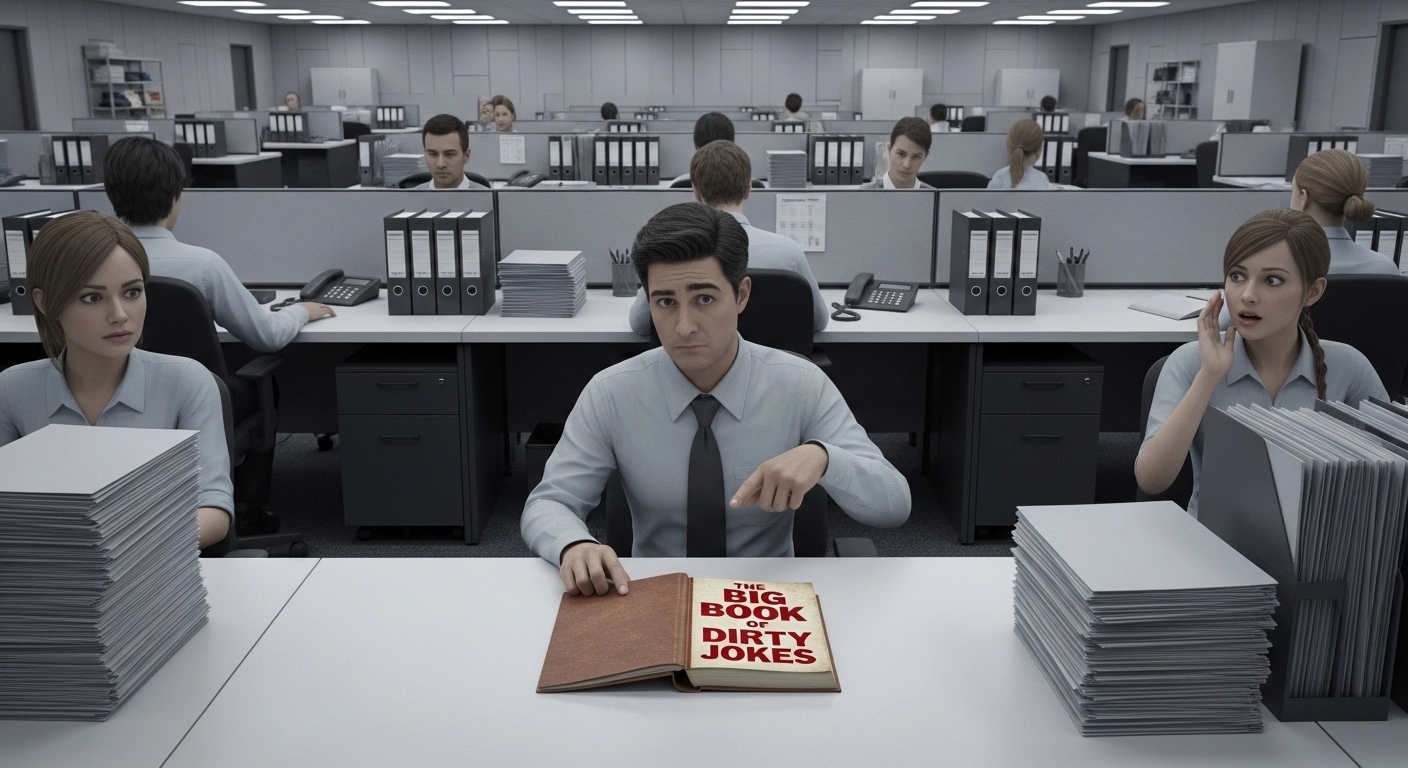
Imagine waking up in a perfectly polite world. Every joke is clean. Every punchline is safe. Every laugh is predictable. At first, it might feel peaceful… even proper.
But then something strange happens.
Conversations feel flatter. Comedy feels scripted. Friends laugh politely, but the spark the mischievous sparkle in someone’s eye when they tell a slightly naughty joke has vanished. Suddenly, you realize something important about humor and human psychology.
A world without playful boundaries, teasing humor, or cheeky jokes would feel oddly empty. Humor isn’t just about laughter; it’s about connection, tension release, and the playful dance between what is allowed and what is taboo.
That’s why imagining a boring world where the concept of dirty jokes becomes a fascinating thought experiment. It reveals how humor shapes culture, friendship, creativity, and even emotional intelligence.
Let’s explore this unusual idea together.
A Thought Experiment: a boring world where the concept of dirty jokes disappears overnight
- 🌍 People suddenly realize how much playful humor lightens everyday conversations.
- 😂 Comedy clubs struggle because edgy punchlines vanish from routines.
- 🧠 Psychologists observe that humor boundaries help people release social tension.
- 💬 Conversations become polite but strangely predictable and safe.
- 🎭 Stand-up comedians must reinvent their storytelling style completely.
- 📚 Humor theory classes suddenly become more popular than ever.
- 🤝 Friends notice their jokes feel less mischievous and playful.
- 🧩 Cultural humor traditions start fading without cheeky storytelling.
- 🗣️ Sarcasm becomes the new outlet for playful rebellion.
- 🎬 Movie comedies shift toward clever wordplay instead of risqué humor.
- 📖 Writers explore alternative comedic devices like absurdity and irony.
- 🎉 Party conversations feel slightly more formal than before.
- 💡 Creativity grows as people invent new humor formats.
- 🌟 Society learns that humor evolves when boundaries change.
The social psychology of a boring world where the concept of dirty jokes never existed
- 🧠 Humor researchers say taboo topics often trigger stronger laughs.
- 😄 Surprise is a key ingredient in comedy and playful teasing.
- 👥 Social bonding increases when people share inside jokes.
- 📊 Studies show laughter builds trust between groups.
- 💬 Slightly edgy humor can create memorable moments.
- 🎭 Without it, comedians rely more on storytelling and timing.
- 🧩 The brain enjoys solving unexpected word twists.
- 🌱 Cultural humor evolves from social rules and norms.
- 🤔 Humor boundaries teach people emotional awareness.
- 💞 Friends often bond through playful teasing humor.
- 📚 Linguists study how innuendo works in language.
- 🗣️ Tone and delivery matter more than words alone.
- 🧭 Society constantly negotiates what humor feels acceptable.
- ✨ Humor reflects human creativity and curiosity.
Why imagining a boring world where the concept of dirty jokes reveals the power of humor
- 🎭 Humor exposes cultural attitudes and social comfort levels.
- 🌍 Different countries treat playful jokes very differently.
- 📺 Comedy shows evolve based on audience expectations.
- 🧠 The brain processes humor as a puzzle.
- 💬 Playful humor often breaks awkward silence.
- 😄 Shared laughter strengthens friendships quickly.
- 🧩 Surprise creates the biggest comedic payoff.
- 🎉 Humor energizes social gatherings and parties.
- 📖 Storytelling becomes richer when humor is layered.
- 🗣️ People remember funny conversations longer.
- 🎬 Movies rely on humor timing for emotional relief.
- 🤝 Humor can bridge cultural differences.
- 🌟 Laughter creates memorable shared experiences.
- 💡 Comedy reflects society’s changing values.
Cultural comedy traditions in a boring world where the concept of dirty jokes never developed
- 🎭 Ancient storytellers used clever wordplay instead.
- 📚 Folk tales relied on trickster characters for humor.
- 🎪 Traveling performers entertained with physical comedy.
- 🎬 Film comedians focused on slapstick humor.
- 📖 Writers explored witty dialogue and satire.
- 🎤 Stand-up routines emphasized observational comedy.
- 🌍 Regional humor styles evolved independently.
- 🧠 Intellectual humor gained popularity.
- 🗣️ Clever puns dominated everyday jokes.
- 🎭 Theater emphasized exaggerated personalities.
- 🎉 Festivals celebrated playful storytelling competitions.
- 💬 Family gatherings encouraged creative storytelling.
- 🎨 Cartoon humor became wildly popular.
- 🌟 Wordplay became the ultimate comedic skill.
Friendship dynamics inside a boring world where the concept of dirty jokes is missing
- 🤝 Friends rely more on sarcasm and teasing.
- 💬 Inside jokes become the main humor currency.
- 🎉 Parties focus on storytelling competitions.
- 😄 Physical comedy becomes more common.
- 🧩 Creative pranks replace cheeky jokes.
- 🎭 Role-play humor gains popularity.
- 📚 Funny stories from childhood dominate conversations.
- 🗣️ Impressions of famous people become popular.
- 😂 Meme culture evolves differently.
- 🎮 Gaming jokes become a bonding tool.
- 🎬 Movie quotes become social humor shortcuts.
- 🎤 Karaoke humor nights appear at gatherings.
- 🧠 Word puzzles become comedic challenges.
- 🌟 Shared laughter still keeps friendships strong.
Comedy entertainment in a boring world where the concept of dirty jokes never shaped stand-up
- 🎤 Comedians master storytelling techniques.
- 📺 Sitcoms rely on awkward situations.
- 🎬 Romantic comedies use clever dialogue.
- 🎭 Improvisation shows become extremely popular.
- 🧠 Observational humor dominates stand-up stages.
- 🎉 Audience participation games create laughter.
- 🎪 Physical comedy returns to popularity.
- 🗣️ Clever sarcasm drives punchlines.
- 📖 Writers experiment with absurd humor.
- 🎭 Character-based comedy becomes mainstream.
- 🎬 Animated comedy flourishes creatively.
- 🎤 Musical comedy routines emerge.
- 🎉 Comedy festivals celebrate creative humor forms.
- 🌟 Clever storytelling becomes the highest skill.
Language evolution in a boring world where the concept of dirty jokes never influenced slang
- 🧠 Linguists observe slower slang development.
- 📚 Dictionaries evolve differently.
- 💬 Euphemisms appear less frequently.
- 🗣️ Playful metaphors remain common.
- 🎭 Humor focuses on exaggeration.
- 🧩 Wordplay becomes a major cultural skill.
- 🌍 Regional dialect humor grows stronger.
- 📖 Writers explore creative descriptive language.
- 🎬 Scripts emphasize witty dialogue.
- 🎤 Comedians become masters of timing.
- 🤝 Friendly teasing shapes social speech.
- 📊 Humor becomes a linguistic study topic.
- 🧠 Cognitive scientists analyze joke structures.
- 🌟 Language creativity thrives.
Creativity blooms in a boring world where the concept of dirty jokes never existed
- 🎨 Artists create humorous visual storytelling.
- 📚 Writers invent absurd comedic worlds.
- 🎬 Filmmakers explore surreal humor styles.
- 🎭 Theater experiments with exaggerated characters.
- 🎮 Game designers create humorous storylines.
- 🧠 Creative writing classes study humor theory.
- 🎤 Spoken-word comedy grows popular.
- 🌍 Cultural satire evolves differently.
- 📖 Fantasy humor becomes mainstream.
- 🎪 Street performers invent creative routines.
- 🧩 Puzzle humor attracts intellectual audiences.
- 🎨 Comic strips dominate entertainment.
- 🎬 Animated storytelling flourishes.
- 🌟 Creativity thrives when humor adapts.
Emotional intelligence lessons from a boring world where the concept of dirty jokes vanished
- 🧠 Humor teaches social awareness.
- 🤝 Respectful boundaries improve communication.
- 💬 Conversations feel safer for many people.
- 📚 Schools teach humor ethics.
- 🌱 Empathy grows in social interactions.
- 🗣️ People become mindful of tone.
- 🎭 Comedy becomes more inclusive.
- 😄 Laughter still reduces stress.
- 🧩 People learn alternative ways to joke.
- 🎉 Celebrations still include playful humor.
- 💡 Humor becomes thoughtful and creative.
- 📊 Researchers study laughter psychology.
- 🤗 Social comfort becomes a priority.
- 🌟 Emotional intelligence strengthens.
Entertainment media in a boring world where the concept of dirty jokes is absent
- 📺 Sitcoms rely on family situations.
- 🎬 Adventure films include comic relief scenes.
- 📚 Comedy novels focus on awkward misunderstandings.
- 🎭 Sketch shows highlight exaggerated personalities.
- 🎤 Podcast comedians tell funny life stories.
- 🎮 Games include humorous character dialogue.
- 🎬 Animation delivers clever jokes.
- 📖 Teen comedy stories explore school life humor.
- 🎪 Variety shows mix magic and comedy.
- 🧩 Puzzle shows add witty commentary.
- 🎤 Crowd-work comedy becomes popular.
- 🎭 Improvised comedy thrives online.
- 🎬 Streaming platforms promote creative humor.
- 🌟 Comedy evolves creatively.
Internet culture inside a boring world where the concept of dirty jokes never became memes
- 😂 Memes focus on relatable life moments.
- 🎮 Gaming humor dominates online spaces.
- 🐱 Animal memes remain universally popular.
- 📺 TV quotes become viral jokes.
- 🎬 Movie reaction memes spread quickly.
- 📚 Book fandom humor grows online.
- 🧩 Clever wordplay memes trend.
- 🧠 Educational humor pages flourish.
- 🎨 Comic-style memes dominate timelines.
- 🎉 Positive humor spreads faster.
- 💬 Sarcastic tweets gain popularity.
- 📊 Data humor becomes niche entertainment.
- 🗣️ Internet slang evolves differently.
- 🌟 Online humor stays playful.
Parenting conversations in a boring world where the concept of dirty jokes never entered culture
- 👨👩👧 Parents focus on storytelling humor.
- 📚 Bedtime stories include funny characters.
- 🎉 Family game nights encourage laughter.
- 🧠 Kids learn humor through wordplay.
- 🎭 School plays highlight comedy skills.
- 📖 Children’s books explore silly adventures.
- 🎬 Family movies rely on visual comedy.
- 🎮 Video games add playful dialogue.
- 🤝 Kids develop social humor skills.
- 🎉 Birthday parties feature comedic games.
- 📚 Teachers use humor to engage students.
- 🧩 Puzzle humor entertains curious minds.
- 🎭 Imagination fuels funny storytelling.
- 🌟 Families bond through laughter.
What society learns from a boring world where the concept of dirty jokes is only a myth
- 🧠 Humor reflects human curiosity.
- 🌍 Cultural rules shape comedy styles.
- 🎭 Boundaries influence creativity.
- 🤝 Shared laughter builds trust.
- 💬 Humor can unite diverse groups.
- 🎉 Playfulness keeps social life vibrant.
- 📚 Comedy reveals social values.
- 🎬 Entertainment adapts quickly.
- 🧩 People seek laughter in many forms.
- 🗣️ Conversation thrives on humor.
- 🎤 Storytelling becomes a powerful tool.
- 🧠 Creativity grows with limitations.
- 🌱 Culture evolves continuously.
- 🌟 Laughter remains universal.
The ultimate lesson of a boring world where the concept of dirty jokes fades away
- 🌟 Humor always finds new paths.
- 😂 People crave laughter and connection.
- 🧠 Creativity expands when humor shifts.
- 🎭 Comedy reflects cultural identity.
- 📚 Storytelling becomes richer.
- 🎉 Social gatherings still celebrate laughter.
- 💬 Conversations stay lively through wit.
- 🎬 Entertainment reinvents comedy styles.
- 🧩 Wordplay gains popularity.
- 🤝 Friends bond through shared humor.
- 🌍 Global cultures shape comedy uniquely.
- 💡 Humor reveals human imagination.
- 🗣️ Playful teasing survives in other forms.
- ❤️ Laughter remains part of being human.
Frequently Asked Questions
Why do people find slightly edgy humor funny?
Humor often works because it surprises the brain. When a joke bends social expectations or plays with mild taboos, the brain experiences a quick twist in meaning. That twist creates laughter. Psychologists call this “incongruity theory,” where humor appears when something unexpected happens. However, context matters. What feels funny among close friends may not feel appropriate in formal settings. Humor is deeply influenced by culture, relationships, and emotional awareness. The key is understanding boundaries and respecting different comfort levels while still enjoying playful conversation and clever storytelling.
Would comedy disappear in a world without dirty jokes?
Not at all. Comedy is incredibly flexible. If one type of humor disappears, others naturally become more popular. Observational humor, sarcasm, wordplay, and absurd comedy can easily take center stage. Historically, many cultures relied on clever dialogue, physical comedy, and storytelling long before modern stand-up existed. Even today, many comedians build careers on witty insights about everyday life. Humor adapts quickly because people naturally crave laughter and emotional release. A different comedic style would simply evolve to fill the gap.
Why does humor help people bond socially?
Laughter signals safety and shared understanding. When people laugh together, their brains release feel-good chemicals that strengthen emotional connections. Humor can break tension, make awkward situations easier, and create shared memories. Even simple jokes or playful teasing can turn strangers into friends quickly. That’s why humor is such a powerful communication tool. It builds trust, encourages openness, and helps people relax around each other. In many ways, laughter acts like social glue that keeps relationships warm and comfortable.
Is humor different in every culture?
Yes, humor varies widely across cultures. What one country finds hilarious might confuse or even offend another audience. Cultural traditions, language structure, social norms, and history all influence humor styles. Some cultures prefer clever wordplay, while others enjoy exaggerated storytelling or visual comedy. Regional slang and cultural references also shape what people find funny. That diversity is part of what makes humor fascinating. It reflects how communities think, communicate, and connect with each other.
Can humor exist without crossing boundaries?
Absolutely. Many comedians specialize in clever humor that relies on storytelling, timing, and creative wordplay rather than controversial topics. Physical comedy, observational humor, and satire are powerful tools that don’t require risky themes. In fact, some of the most beloved comedians in history built their reputation on universal humor that everyone could enjoy. Comedy thrives on creativity, and there are countless ways to make people laugh without relying on edgy material.
Why does the brain enjoy jokes and punchlines?
The brain loves patterns. When listening to a joke, the mind tries to predict what will happen next. A punchline suddenly changes the expected meaning, which creates a small mental surprise. That surprise triggers laughter. This reaction happens quickly and naturally. Scientists believe humor also helps the brain practice flexible thinking. It trains people to see situations from different angles and interpret language creatively.
Can humor improve mental health?
Yes, laughter has strong psychological benefits. It can reduce stress hormones, boost mood, and help people cope with difficult situations. Humor also encourages positive social interaction, which improves emotional well-being. Many therapists even recommend finding moments of humor during stressful periods. While humor doesn’t solve every problem, it can create emotional relief and help people regain perspective during challenging moments.
Why do comedians study audience reactions carefully?
Comedy depends heavily on timing, tone, and audience expectations. A joke that works in one room might fall flat in another. Comedians observe body language, laughter levels, and audience energy to adjust their performance. Skilled comedians treat comedy like a conversation rather than a speech. They experiment with delivery, pacing, and storytelling techniques until the audience responds with genuine laughter.
Conclusion
Imagining a boring world where the concept of dirty jokes disappears reveals something surprisingly deep about human nature. Humor is not just about jokes it’s about connection, creativity, and emotional expression.
Whether through clever wordplay, funny stories, or playful teasing, people will always find ways to laugh together. Comedy evolves with culture, language, and social values. Even if one style fades, another will rise to take its place.
Because at the heart of every society lies one universal truth:
Humans need laughter.
And no matter how the world changes, that joyful spark will never disappear.
