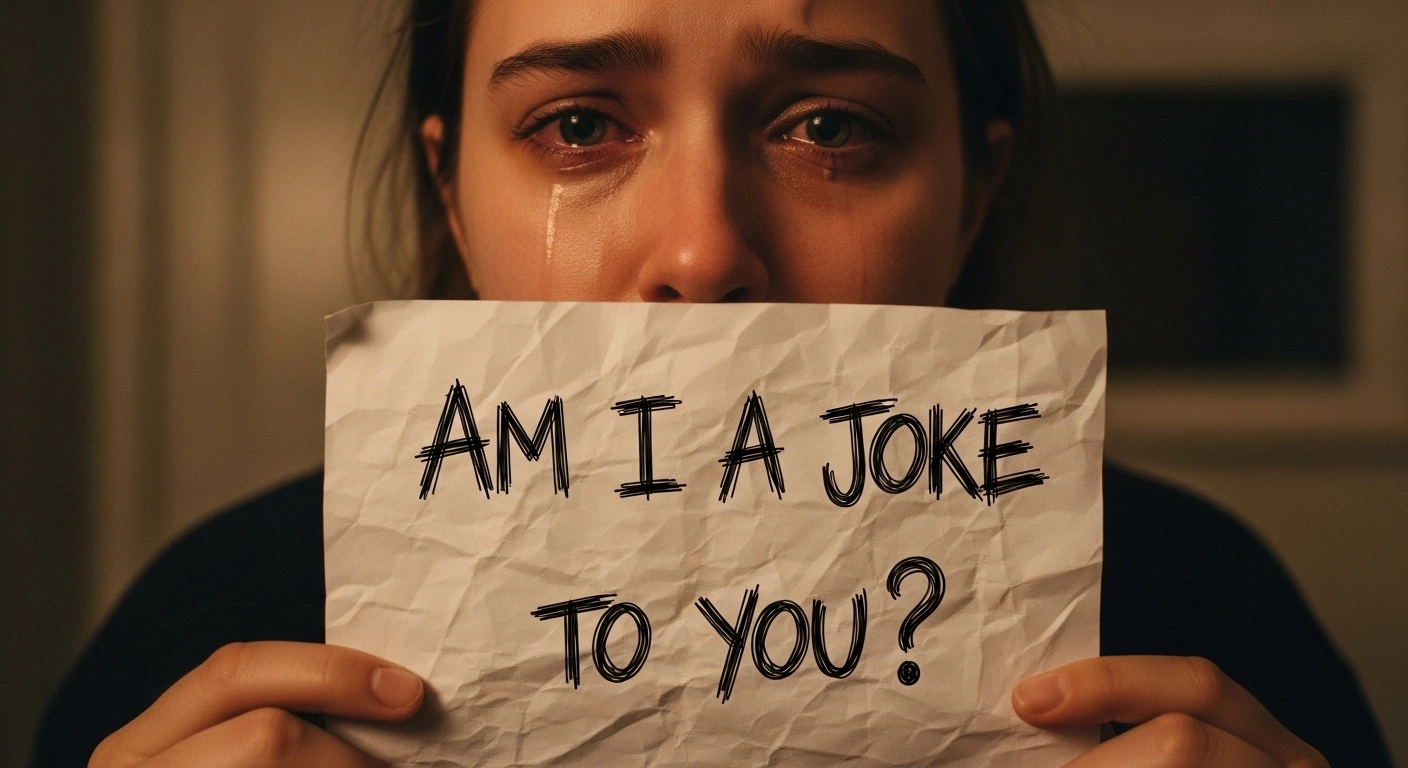
Have you ever found yourself in a conversation, telling your heart out, only to see someone shrug, laugh, or dismiss your words? That sting—the one that hits deep in your soul—makes you silently whisper to yourself: “Am I a joke to you?” 💔 It’s more than just a question; it’s a raw emotional response, a signal that your value, feelings, or presence may be underappreciated.
Whether it happens with friends, partners, coworkers, or even family, this feeling of invisibility can quietly erode self-esteem, spark confusion, and make you question your worth.
In this article, we will dive deep into the psychological, social, and emotional layers of asking, “Am I a joke to you?” You’ll discover how to identify it, understand its roots, and navigate the tricky waters of being dismissed while reclaiming your voice, power, and confidence.
Am I a Joke to You? Recognizing the First Signs of Emotional Dismissal
- 😶 Feeling unheard in conversations, as if your words vanish into thin air.
- 😒 Constant jokes at your expense, leaving you unsure whether to laugh or cry.
- 🕵️♀️ Noticing subtle eye-rolls or smirks when you express serious thoughts.
- 🛑 Your opinions are often brushed off or minimized in meetings or discussions.
- 💬 Sarcasm that cuts deeper than intended, leaving emotional bruises.
- 🧩 Being included in group activities but never genuinely consulted.
- 💤 People changing topics abruptly when you speak.
- ❌ Feeling invalidated for expressing feelings, as if emotions are optional.
- 🤷♀️ Others forgetting your boundaries, needs, or preferences repeatedly.
- 💔 Friends or loved ones laughing at your mistakes instead of supporting you.
- 🌀 Feeling confused about your worth in the social hierarchy.
- 😔 Experiencing guilt when defending yourself against jokes or mockery.
- ⚖️ Comparing yourself to others and questioning why you aren’t “taken seriously.”
- 🔍 Seeking external validation to confirm your own feelings and reality.
Am I a Joke to You? The Psychology Behind Feeling Invisible
- 🧠 Cognitive distortion: believing your worth is tied to others’ recognition.
- 💔 Emotional neglect in childhood shaping adult sensitivity to mockery.
- 🔄 Repeated invalidation leading to chronic self-doubt.
- 🕵️♂️ Overanalyzing social cues that might not even be directed at you.
- 😥 Low self-esteem amplifying feelings of invisibility.
- 🛡️ Defense mechanisms like sarcasm to protect fragile self-worth.
- 🌪️ Emotional hijacking triggered by minor social slights.
- 🧩 Mirror neurons picking up subtle contempt from others.
- 🕊️ Desire for acceptance conflicting with fear of being mocked.
- 📉 Self-worth erosion due to persistent humor at your expense.
- 🧱 Internalized criticism forming limiting beliefs about yourself.
- 🎭 People-pleasing tendencies masking genuine reactions.
- 🔗 Attachment styles influencing perception of jokes as threats.
- 🔍 Rumination over social interactions increasing emotional sensitivity.
Am I a Joke to You? How Social Dynamics Amplify Emotional Pain
- 👥 Peer pressure making it hard to speak up without fear.
- 🎯 Groupthink encouraging laughter at someone’s expense.
- 🔄 Social hierarchies placing you in a lower status, fostering invisibility.
- 😬 Microaggressions disguised as jokes.
- 💬 Gossip reinforcing feelings of being a “lesser” in the social circle.
- 🏆 Comparison culture magnifying self-doubt.
- 🕶️ Social masks hiding true intentions of mockery.
- ⚡ Public embarrassment triggering fight-or-flight responses.
- 🤐 Silence as a social weapon making your voice seem irrelevant.
- 🧩 Miscommunication escalating misunderstandings and jokes.
- 🌐 Online dynamics amplifying mockery beyond real-life encounters.
- 🧭 Navigating toxic social circles can heighten emotional sensitivity.
- 🔗 Dependency on social validation worsening emotional impact.
- 🌪️ Social exclusion as a reinforcement of feeling like a joke.
Am I a Joke to You? Emotional Signs You’re Being Undermined
- 😭 Sudden feelings of sadness or shame after jokes.
- ⚡ Anxiety spikes when entering social settings.
- 🥀 Loss of confidence in expressing opinions publicly.
- 🧠 Overthinking past interactions repeatedly.
- 💔 Feeling isolated despite being surrounded by people.
- 🔒 Emotional withdrawal to protect yourself from ridicule.
- 🔄 Self-sabotage in social or professional contexts.
- 🗣️ Hesitation to speak up for fear of ridicule.
- 🎭 Pretending to laugh along while inside you’re hurting.
- 🌫️ Emotional numbness as a coping mechanism.
- 🧩 Difficulty trusting intentions of friends or colleagues.
- 📉 Sudden decline in motivation or enthusiasm.
- 🌊 Emotional flooding triggered by minor slights.
- 🛡️ Hyper-vigilance to jokes or sarcasm as potential attacks.
Am I a Joke to You? Navigating Toxic Humor in Relationships
- 😂 Differentiating playful teasing from harmful mockery.
- 🛑 Setting clear boundaries around acceptable humor.
- 💬 Communicating your emotional limits gently but firmly.
- 🔄 Recognizing recurring patterns of belittlement.
- 🌱 Encouraging empathy in those who unintentionally hurt.
- 💔 Removing yourself from repeated emotional harm.
- 🧠 Understanding your triggers to respond calmly.
- 🥂 Seeking allies who validate your feelings.
- 📚 Learning assertiveness techniques to protect self-worth.
- 🤝 Balancing forgiveness with accountability.
- 🔍 Observing social cues to predict emotional risk.
- 🧩 Documenting incidents to clarify recurring behavior.
- 🎯 Targeted communication rather than public confrontation.
- 🌟 Prioritizing emotional safety over social acceptance.
Am I a Joke to You? The Impact on Self-Esteem and Identity
- 🪞 Self-image affected by constant mockery.
- 🧱 Building walls to avoid emotional pain.
- ⚖️ Feeling your identity is constantly judged.
- 🌀 Internal conflict between self-perception and social perception.
- 😔 Questioning your value in personal and professional life.
- 🔗 Dependence on external validation increases vulnerability.
- 🧠 Negative self-talk reinforcing feelings of invisibility.
- 🌪️ Emotional burnout from repeated dismissal.
- 💬 Overapologizing to preempt potential ridicule.
- 🥀 Fear of failure stemming from past mockery.
- 🕊️ Seeking external approval to restore self-worth.
- 🎭 Masking true self to avoid criticism.
- 🌱 Reclaiming confidence through self-compassion.
- 🌟 Redefining identity independent of others’ judgments.
Am I a Joke to You? Understanding Gaslighting and Emotional Manipulation
- 🌀 Subtle lies making you question your perception.
- 💭 Twisting past events to invalidate feelings.
- 🧠 Cognitive dissonance causing self-doubt.
- 🛡️ Emotional manipulation disguised as humor.
- ⚡ Sudden mood shifts to control reactions.
- 🔄 Repeated minimization of your concerns.
- 😳 Feeling guilty for confronting hurtful jokes.
- 🕵️♀️ Confusion over reality versus others’ narratives.
- 🌫️ Emotional fog hindering decision-making.
- 🗝️ Recognizing patterns to regain clarity.
- 💬 Setting verbal boundaries to assert truth.
- 🧩 Journaling experiences to track manipulation.
- 🔍 Seeking trusted outside perspectives.
- 🌟 Reclaiming authority over your emotional reality.
Am I a Joke to You? When Humor Becomes Emotional Abuse
- 🛑 Repeated belittlement crossing emotional boundaries.
- 💔 Mockery causing persistent sadness or anxiety.
- 🧠 Internalizing jokes as reflections of your worth.
- ⚡ Experiencing stress-related physical symptoms.
- 🎭 Pretending everything is fine to avoid confrontation.
- 🌪️ Social fear leading to isolation.
- 🔄 Pattern recognition as a tool for awareness.
- 🗣️ Seeking professional support to process abuse.
- 🤝 Support networks validating your experience.
- 📝 Documenting incidents for clarity and safety.
- 💬 Communicating limits and expectations.
- 🧩 Learning coping strategies to rebuild self-esteem.
- 🌱 Prioritizing healing over maintaining toxic connections.
- 🌟 Embracing your emotional needs as legitimate and vital.
Am I a Joke to You? How to Assert Yourself Without Alienating Others
- 🗣️ Using “I” statements to express feelings clearly.
- 🧠 Maintaining calm tone to avoid escalation.
- 🔄 Addressing issues promptly rather than bottling them.
- 🌱 Reinforcing boundaries with consistency.
- 🛑 Saying “no” without guilt or overexplaining.
- 💬 Redirecting conversations that turn mocking.
- ⚖️ Balancing firmness with empathy.
- 🥂 Reinforcing positive social interactions.
- 📝 Preparing key points for clarity.
- 🎯 Avoiding personal attacks while asserting self-worth.
- 🌟 Celebrating small victories in self-assertion.
- 🧩 Recognizing when to disengage from harmful dynamics.
- 🔍 Observing reactions to fine-tune communication.
- 🕊️ Embracing self-respect as a priority.
Am I a Joke to You? Healing From Social Dismissal and Mockery
- 🌱 Practicing self-compassion and inner validation.
- 🧘♀️ Mindfulness exercises to ground emotions.
- 💌 Writing letters to process feelings.
- 🤝 Engaging supportive communities.
- 📚 Learning assertiveness and communication skills.
- 🛡️ Strengthening personal boundaries.
- 🎨 Creative outlets to release emotional tension.
- 🧩 Reflecting on patterns to prevent recurrence.
- ⚡ Letting go of people who consistently hurt you.
- 🕊️ Focusing on self-worth independent of external validation.
- 🧠 Cognitive reframing to reduce emotional triggers.
- 🌟 Celebrating achievements and milestones.
- 💬 Open conversations with trusted friends about experiences.
- 🌀 Continuous emotional self-care and awareness.
Am I a Joke to You? Recognizing Subtle Signs in Romantic Relationships
- 💔 Partner laughing at insecurities instead of supporting them.
- 😬 Frequent sarcastic remarks that sting unexpectedly.
- 🌀 Feeling dismissed during discussions of feelings.
- 🧠 Overanalyzing jokes to detect hidden meanings.
- 🛑 Ignoring emotional boundaries in private and public settings.
- 💬 Gaslighting disguised as humor.
- 🌪️ Emotional distancing after making a hurtful joke.
- 🕵️♀️ Mixed signals causing confusion about intent.
- 🥀 Reduced self-esteem in the relationship context.
- 🎭 Pretending to enjoy humor to avoid conflict.
- 🔗 Dependence on validation from the partner.
- 🧩 Patterns of belittlement indicating deeper issues.
- 🌱 Initiating gentle but firm boundary-setting conversations.
- 🌟 Prioritizing emotional health over tolerating mockery.
Am I a Joke to You? Dealing With Workplace Humor That Crosses Lines
- 🏢 Recognizing power dynamics in office humor.
- 😒 Subtle ridicule from colleagues affecting confidence.
- 📝 Documenting incidents for HR clarity.
- ⚖️ Balancing professionalism with self-assertion.
- 💬 Communicating discomfort respectfully.
- 🧠 Managing emotional responses to workplace mockery.
- 🌪️ Preventing escalation by strategic disengagement.
- 🔄 Seeking mentorship or allies for guidance.
- 🕊️ Creating a supportive work environment.
- 🎯 Recognizing patterns before addressing leadership.
- 🛑 Knowing when to escalate concerns to HR or management.
- 🌱 Fostering self-confidence despite workplace jokes.
- 🧩 Encouraging constructive humor over harmful mockery.
- 🌟 Prioritizing career growth while protecting emotional health.
Am I a Joke to You? The Role of Self-Perception in Feeling Mocked
- 🪞 Understanding your sensitivity triggers.
- 🔄 Reframing negative internal narratives.
- 🧠 Strengthening self-esteem to buffer mockery.
- 🌱 Affirming your worth daily.
- 💬 Practicing positive self-talk after hurtful interactions.
- 🛡️ Emotional resilience through boundary reinforcement.
- 🧩 Identifying patterns of self-doubt.
- 🎯 Reducing overanalysis of others’ humor.
- ⚡ Using setbacks as growth opportunities.
- 🕊️ Embracing imperfections as part of your humanity.
- 🌪️ Avoiding self-blame when jokes sting.
- 🔍 Learning to distinguish harmless humor from dismissiveness.
- 💌 Journaling emotional responses for clarity.
- 🌟 Cultivating self-love independent of social validation.
Am I a Joke to You? Reclaiming Your Voice and Emotional Power
- 🗣️ Speaking confidently without apology.
- 💬 Advocating for your emotional needs.
- 🛡️ Protecting personal boundaries consistently.
- 🌱 Surrounding yourself with supportive individuals.
- 🎯 Engaging in assertiveness training or coaching.
- 🧠 Recognizing manipulative behavior early.
- 🔄 Transforming hurt into personal growth.
- 🌟 Celebrating emotional victories.
- 🥂 Sharing experiences to empower others.
- 🧩 Detaching self-worth from others’ opinions.
- 💌 Self-affirmation practices for daily empowerment.
- 🕊️ Embracing authenticity over social approval.
- ⚡ Responding with calm authority instead of reactive anger.
- 🌈 Living unapologetically as your full, valuable self.
FAQ: Am I a Joke to You?
Q1: How do I know if someone is truly mocking me or just joking?
A1: Observe patterns, context, and intent. If jokes consistently belittle you, target insecurities, or make you feel dismissed, it’s likely more than playful humor. Healthy jokes respect boundaries, uplift connection, and never leave emotional bruises.
Q2: Can feeling like a joke damage my mental health?
A2: Absolutely. Persistent dismissal can lead to anxiety, low self-esteem, depression, and social withdrawal. Recognizing the signs early and setting boundaries is essential for emotional resilience.
Q3: How can I respond when I feel like a joke to someone?
A3: Use calm, assertive “I” statements. Express how the remark affects you, redirect the conversation, or remove yourself from harmful dynamics. Emotional validation from yourself is key.
Q4: Does being sensitive mean I’m overreacting to jokes?
A4: Sensitivity isn’t overreaction. It’s emotional intelligence. Feeling hurt signals that your boundaries, values, or self-worth may be under threat, which deserves acknowledgment, not dismissal.
Q5: Can relationships survive humor that crosses emotional boundaries?
A5: Yes, with clear communication, empathy, and consistent boundary-setting. Both partners must acknowledge the impact of hurtful humor and commit to emotional safety.
Q6: How do I differentiate playful teasing from emotional abuse?
A6: Playful teasing is occasional, light-hearted, and mutual. Emotional abuse involves repetitive, targeted mockery that erodes confidence, causes fear, or manipulates emotions. Context and frequency are crucial.
Q7: Can workplace jokes affect career growth?
A7: Definitely. Persistent ridicule can harm confidence, reputation, and performance. Document incidents, communicate professionally, and seek mentorship or HR support if needed.
Q8: How can I rebuild self-esteem after feeling like a joke?
A8: Engage in self-compassion practices, surround yourself with supportive people, affirm your worth daily, and reflect on your achievements. Emotional resilience grows when you prioritize internal validation.
Q9: Is it normal to question my worth when feeling dismissed?
A9: Yes. Social feedback heavily influences self-perception. Awareness, boundary-setting, and emotional self-care can prevent prolonged self-doubt.
Q10: Can journaling help when I feel like a joke?
A10: Absolutely. Journaling clarifies patterns, validates feelings, and provides a safe space to process emotions, transforming hurt into actionable insights for personal growth.
CONCLUSION
Feeling like a joke is painful, but it doesn’t define your worth. By recognizing emotional dismissal, setting boundaries, and embracing self-love, you can reclaim your voice and confidence.
Remember, asking “Am I a joke to you?” is the first step toward empowerment, and you deserve to be heard, respected, and valued in every aspect of your life. 🌟
